
Journal · Buyer guide
How Much Does It Cost to Live in Huntington Beach?
A factual, snippet-ready breakdown of what it actually costs to live in Huntington Beach, from housing and property taxes to HOA, Mello-Roos, coastal insurance, and utilities.
August 31, 2026 · 12 min read
By Justin Ratowsky, Realtor®, Ratowsky Group at Compass
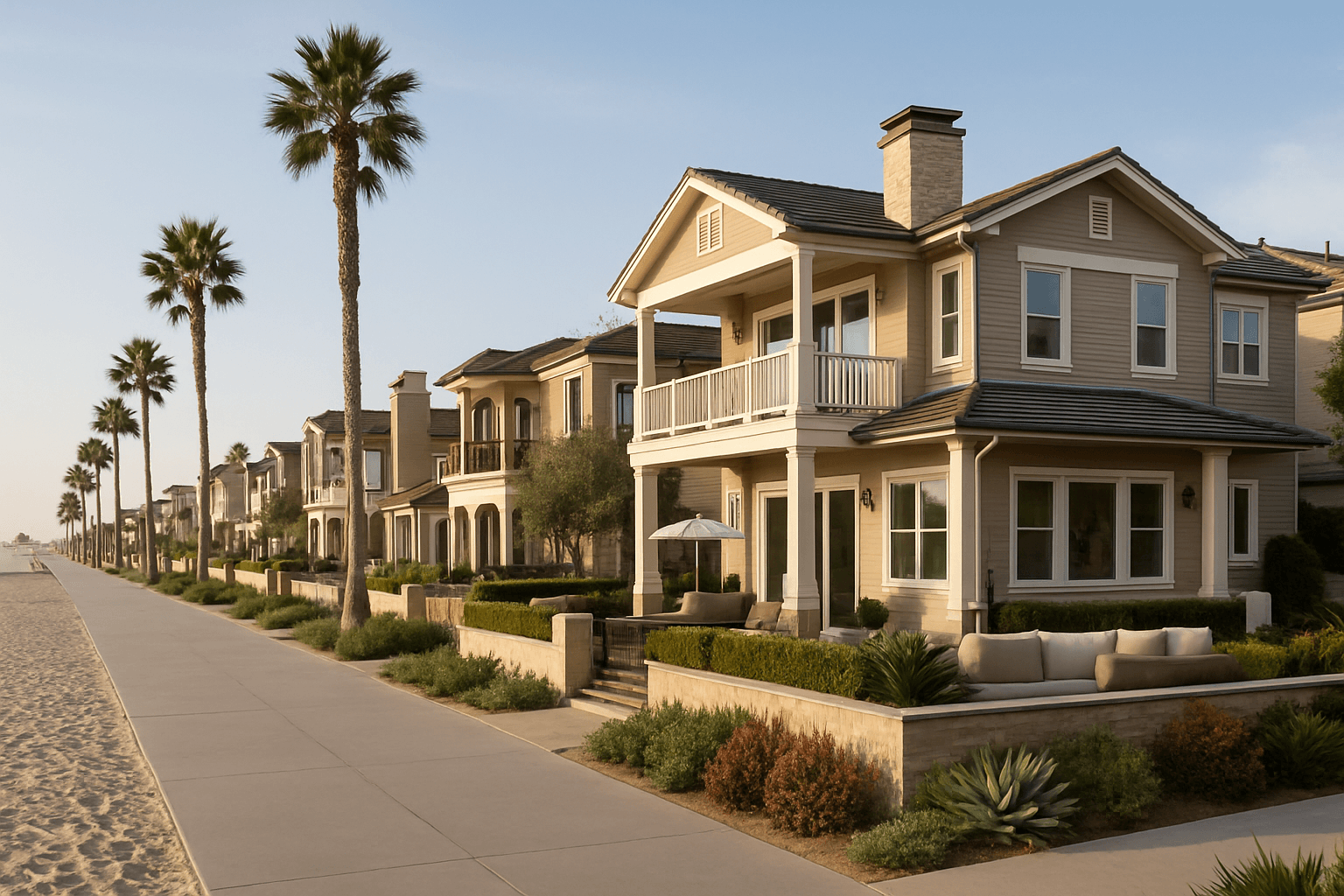
How much does it cost to live in Huntington Beach?
Living in Huntington Beach means budgeting for coastal Orange County housing, a roughly 1% base property tax under Prop 13, possible HOA or Mello-Roos dues, and higher near-coast insurance and utility costs.
What does it really cost to live in Huntington Beach?
The honest answer is that your cost of living in Huntington Beach comes down to one big line item and several smaller ones. Housing drives most of it, whether you own or rent, and everything else stacks on top. After the mortgage or rent, you are looking at property taxes tied to your purchase price, possible HOA or Mello-Roos charges depending on the neighborhood, home insurance that runs higher near the coast, utilities, and the general California-and-Orange-County cost of gas, groceries, and services.
There is no single number that fits everyone, because a downtown condo, a Central Park single-story, and a Huntington Harbour waterfront home carry very different carrying costs. What stays consistent is the framework. If you understand the pieces, you can build a realistic monthly budget for coastal Orange County living instead of guessing.
This page walks through each cost driver in plain terms so you can see how the total comes together. For current pricing on a specific home or block, the numbers move month to month, so it helps to pull live figures and, when you are ready, have a direct conversation. Justin and Craig Ratowsky work across Huntington Beach and nearby coastal communities, and you can start with a look at the local market data on the Huntington Beach market page.
What do homes cost to buy in Huntington Beach right now?
Huntington Beach spans a wide price range, which surprises people who assume everything on the coast is a trophy home. The city runs from attached condos and townhomes to inland single-family neighborhoods to waterfront estates. Justin and Craig Ratowsky have sold across that full spectrum, from first homes and condos up to a $6.65M oceanfront sale, and roughly half of the group's business is in Huntington Beach itself.
Because prices shift with interest rates and inventory, the smart move is to check a live source rather than a static number. Redfin and the California Association of Realtors both publish current median sale prices and price-per-square-foot for the area, and those are the figures worth watching before you set a budget. As a rule of thumb, the closer you get to the sand and the ZIP codes near the water (92648 and 92649), the higher the price per foot tends to run.
Location inside the city matters as much as the headline price. A remodeled home in Downtown or Old Town, an inland tract near Central Park, and a dock-front property in Huntington Harbour can all carry different values even at similar square footage, because the lot, the view, and the water access are priced separately. If you want to understand how those factors translate to real dollars, the buyers page and the buying a home in Huntington Beach guide lay out the process, and a home value review is the fastest way to ground a number if you already own here.
What do rentals cost in Huntington Beach?
Renting follows the same logic as buying. Coastal proximity, unit size, and building amenities set the rent, and the range is wide. A studio or one-bedroom apartment inland costs less than a beach-close two- or three-bedroom, and a furnished or short-term coastal rental sits higher still. For current rent ranges, Redfin and other rental data sources track median asking rents by bedroom count, which is the cleanest way to compare.
Renters near the coast should also factor in what is not always advertised. Parking can be limited and sometimes carries a separate fee, some buildings pass through certain utilities, and renters insurance is inexpensive but worth carrying. If you plan to rent first and buy later, keeping an eye on the Huntington Beach market page helps you time the shift.
One thing to keep in mind: renting versus buying in coastal Orange County is not just a monthly-payment comparison. Justin often frames a home purchase as a long-term equity decision, not only a lifestyle one, so the real comparison includes appreciation, tax treatment, and how long you plan to stay. That is a personal-finance conversation, not a one-size answer.
How do property taxes work in Huntington Beach?
California property taxes are governed by Proposition 13, which sets a base rate of roughly 1% of a property's assessed value. When you buy, your assessed value is generally set at your purchase price, and increases to that assessed value are capped at about 2% per year while you own the home. That is why two neighbors on the same Huntington Beach street can pay very different tax bills depending on when each bought.
On top of the 1% base, your bill includes voter-approved local bonds and assessments, which is why the effective rate in most Orange County areas lands a bit above 1%, commonly in the low 1% range. Your actual rate depends on the specific tax rate area for your address, and the Orange County Treasurer-Tax Collector publishes the details for each parcel.
If you are moving within California as an owner age 55 or older, or transferring property between family members, Proposition 19 may affect how your assessed value carries over. It is worth understanding before you buy or sell, and the Prop 19 guide for Huntington Beach breaks down the basics. Ratowsky Group is not a tax advisor, so for how any of this applies to your situation, confirm with a licensed tax professional.
What are HOA fees and Mello-Roos, and who pays them?
HOA dues are one of the biggest cost swings between neighborhoods in Huntington Beach. Detached homes on standard lots often have no HOA at all, while condos, townhomes, and planned communities carry monthly dues that fund shared insurance, common-area maintenance, and amenities. Waterfront and gated communities can run higher because they maintain more, from private streets to docks and seawalls.
Because HOA dues vary so widely, they belong in your budget from day one, not as an afterthought. Before you commit to any attached home, it is worth reading the association's financials, reserves, and rules. The HOA document review guide walks through what to look for, and the condos in Huntington Beach guide covers how HOA structure affects value and carrying cost.
Mello-Roos is separate from HOA dues. It is a special tax under the Community Facilities District law that some newer developments use to pay for infrastructure like roads, schools, and utilities. Not every Huntington Beach home has it, but certain newer master-planned pockets do, and it shows up as a line on the property tax bill for a set number of years. Always ask whether a specific property carries a Mello-Roos assessment, because it changes your true monthly number.
Why does home insurance cost more near the coast?
Insurance is one of the coastal costs that catches newcomers off guard. Properties near the water can face higher premiums because of proximity to the ocean, wind exposure, and in some cases flood-zone designation. The Federal Emergency Management Agency maps flood zones, and if a property sits in a designated zone and you have a federally backed mortgage, flood insurance is typically required on top of a standard homeowners policy.
Beyond flood, California's broader homeowners insurance market has tightened in recent years, which affects availability and pricing statewide, not just at the beach. That makes it smart to get an insurance quote early in your home search rather than at the last minute, so the premium does not surprise your budget. Condo owners have their own layer to think about, since the HOA's master policy covers the building while you carry an individual HO-6 policy for the interior.
For condos specifically, the condo insurance guide for Huntington Beach explains how the master policy and your personal policy fit together. Ratowsky Group does not sell insurance and does not endorse a specific carrier, so the practical step is to shop a few licensed insurers and factor the real quote into your monthly plan.
What do utilities and everyday bills run in a coastal home?
The mild coastal climate in Huntington Beach works in your favor on some utility costs. Many homes near the water rely less on heavy heating and air conditioning than inland areas, which can keep energy use moderate for much of the year. That said, older homes and larger properties still use more, and summer inland heat can push cooling costs up in the parts of town farther from the beach.
Your monthly utilities generally include electricity, natural gas, water and sewer, trash, and internet. Water and sewer are billed through the city, and the City of Huntington Beach publishes current utility rates. Coastal air can also add maintenance costs over time, since salt exposure is harder on exteriors, windows, and metal fixtures, so a small annual upkeep budget is realistic for homes closer to the sand.
None of these individually breaks a budget, but together they add a few hundred dollars a month for most households, more for larger homes. Building them into your plan up front keeps the total honest.
How do everyday costs compare to the Orange County average?
Outside of housing, day-to-day costs in Huntington Beach track with the rest of coastal Orange County and California generally. Gas prices in the state run above the national average, sales tax applies to most retail purchases, and groceries and dining sit at Orange County levels, which are higher than many parts of the country. Coastal dining and services near the beach can price a notch above inland options.
The upside is that a lot of what people value here is low-cost or free. The beach, the bike paths, Central Park, the pier, and the Bolsa Chica wetlands are all open recreation, which offsets some lifestyle spending you might budget for elsewhere. That is part of what draws people to Surf City in the first place.
When you compare Huntington Beach to the broader Orange County average, housing is where the coastal premium shows up most, while everyday goods and services are more in line with the county. If you are weighing neighborhoods, the communities overview and the Huntington Beach area page give you a feel for how the parts of town differ.
What factors drive your true monthly cost in Huntington Beach?
Rather than one average number, it helps to think of your Huntington Beach cost of living as a stack of factors, ranked roughly by how much they move the total. Here is the order that usually matters most:
- Housing payment: your mortgage or rent is the largest single item and swings most with location, proximity to the coast, and current interest rates.
- Property taxes: the roughly 1% base under Prop 13 plus local voter-approved add-ons, assessed on your purchase price.
- HOA dues: zero for many detached homes, but a meaningful monthly line for condos, townhomes, and planned or waterfront communities.
- Mello-Roos: an extra tax line in certain newer developments, so always confirm whether a specific property carries it.
- Home insurance: higher near the coast, with possible flood insurance if the property sits in a FEMA-designated zone.
- Utilities: electricity, gas, water and sewer, trash, and internet, generally moderate thanks to the mild coastal climate.
- Coastal upkeep: a small ongoing maintenance budget for salt-air wear on exteriors, especially closer to the water.
- Everyday costs: gas, groceries, dining, and services at Orange County levels, offset by free beach and park recreation.
How does Huntington Beach compare to nearby coastal Orange County cities?
Huntington Beach sits in the middle of the coastal Orange County price spectrum, which is worth knowing if you are choosing between beach cities. Communities like Newport Beach, Corona del Mar, Laguna Beach, and Newport Coast generally price higher per square foot, especially for oceanfront and view property, while some inland-adjacent areas price lower. Huntington Beach offers a genuinely broad range within one city, from attached homes to waterfront estates.
The cost mechanics are the same across these cities. All of California follows Prop 13 property tax rules, coastal insurance considerations apply throughout the region, and HOA and Mello-Roos depend on the specific development rather than the city name. What changes city to city is mostly the housing price itself and how much water access or view is priced in.
Ratowsky Group works across these coastal Orange County markets, not just one, so the comparison is something Justin and Craig can walk through with you based on your budget and the trade-offs you care about. If you want to see how a specific city or neighborhood pencils out, the contact page is the place to start a no-pressure conversation.
How should you plan for the real number before you move?
The most useful thing you can do is build your own line-by-line estimate for the specific home or neighborhood you are considering, rather than relying on a citywide average. Start with the housing payment, add property taxes based on the likely purchase price, confirm HOA and Mello-Roos for that exact address, get a real insurance quote, and estimate utilities. That gives you a true monthly picture for living in Huntington Beach instead of a rough guess.
Because these numbers change with rates, inventory, and each property's specifics, live data beats old assumptions. Pull current market figures, and if you already own a home here, a home value review is a fast way to understand where you stand before you make a move.
When you want to pressure-test the whole plan against real listings and real carrying costs, that is exactly the kind of grounded, no-hype conversation Justin and Craig Ratowsky have every week across Huntington Beach and coastal Orange County. Reach out through the contact page when you are ready to look at the details together.
One verified number worth knowing: sold across Justin Ratowsky's career while helping 100-plus families, part of Ratowsky Group's 900-plus homes sold, with about half the business in Huntington Beach: $125M+ (source: Ratowsky Group at Compass production).
As Justin Ratowsky, Realtor, DRE #02026158, Ratowsky Group at Compass puts it: "People ask me for one number, but the real cost lives in the details of the specific home. Once you add up the taxes, the HOA or Mello-Roos, the coastal insurance, and the upkeep, you get an honest monthly picture, and that is what you should be buying against."
Sources
Frequently asked questions
- Is Huntington Beach an expensive place to live?
- Huntington Beach is a coastal Orange County city, so housing carries a coastal premium that makes it more expensive than many inland areas. That said, the city spans a wide range from attached homes to waterfront estates, so costs vary a lot by neighborhood and proximity to the beach. Everyday goods and services track with the broader Orange County average.
- How much do property taxes cost in Huntington Beach?
- California property taxes start at a base rate of roughly 1% of assessed value under Proposition 13, with your assessed value generally set at your purchase price when you buy. Voter-approved local bonds and assessments push the effective rate a bit above 1% in most areas. Your exact rate depends on the tax rate area for your specific address, which the Orange County Treasurer-Tax Collector publishes.
- Do all homes in Huntington Beach have HOA fees?
- No. Many detached single-family homes on standard lots have no HOA at all. Condos, townhomes, planned communities, and gated or waterfront neighborhoods typically do carry monthly dues, and those can range widely depending on what the association maintains. Always confirm the dues and review the HOA financials before you commit to an attached home.
- Does Huntington Beach have Mello-Roos taxes?
- Some newer developments in and around Huntington Beach carry Mello-Roos, a special tax that funds infrastructure like roads, schools, and utilities. It is not citywide, so many established homes have none. Because it shows up as a separate line on the property tax bill for a set number of years, always ask whether a specific property is subject to a Mello-Roos assessment.
- Is flood insurance required near the coast in Huntington Beach?
- It depends on the property's flood-zone designation. FEMA maps flood zones, and if a home sits in a designated high-risk zone and you have a federally backed mortgage, flood insurance is typically required on top of a standard homeowners policy. It is smart to check the flood zone and get insurance quotes early in your home search so the premium does not surprise your budget.
- How much does home insurance cost near the beach in Huntington Beach?
- Insurance near the coast can run higher because of ocean proximity, wind exposure, and possible flood-zone status, and California's broader homeowners market has tightened in recent years. Costs vary by property, so the best step is to shop a few licensed insurers for a real quote before you buy. Condo owners also carry an individual HO-6 policy alongside the HOA's master policy.
Topics
- best Huntington Beach realtor
- best Huntington Beach real estate agent
- Huntington Beach realtor
- Huntington Beach real estate agent
- Huntington Beach real estate broker
- Ratowsky Group
- Justin Ratowsky realtor
- Justin Ratowsky Huntington Beach realtor
- Compass Huntington Beach