
Journal · Buyer guide
Moving to Huntington Beach from the Bay Area: What Buyers Should Know
A grounded look at how Huntington Beach pricing, home types, weather, and airport access compare for buyers relocating from the Bay Area.
September 2, 2026 · 13 min read
By Justin Ratowsky, Realtor®, Ratowsky Group at Compass
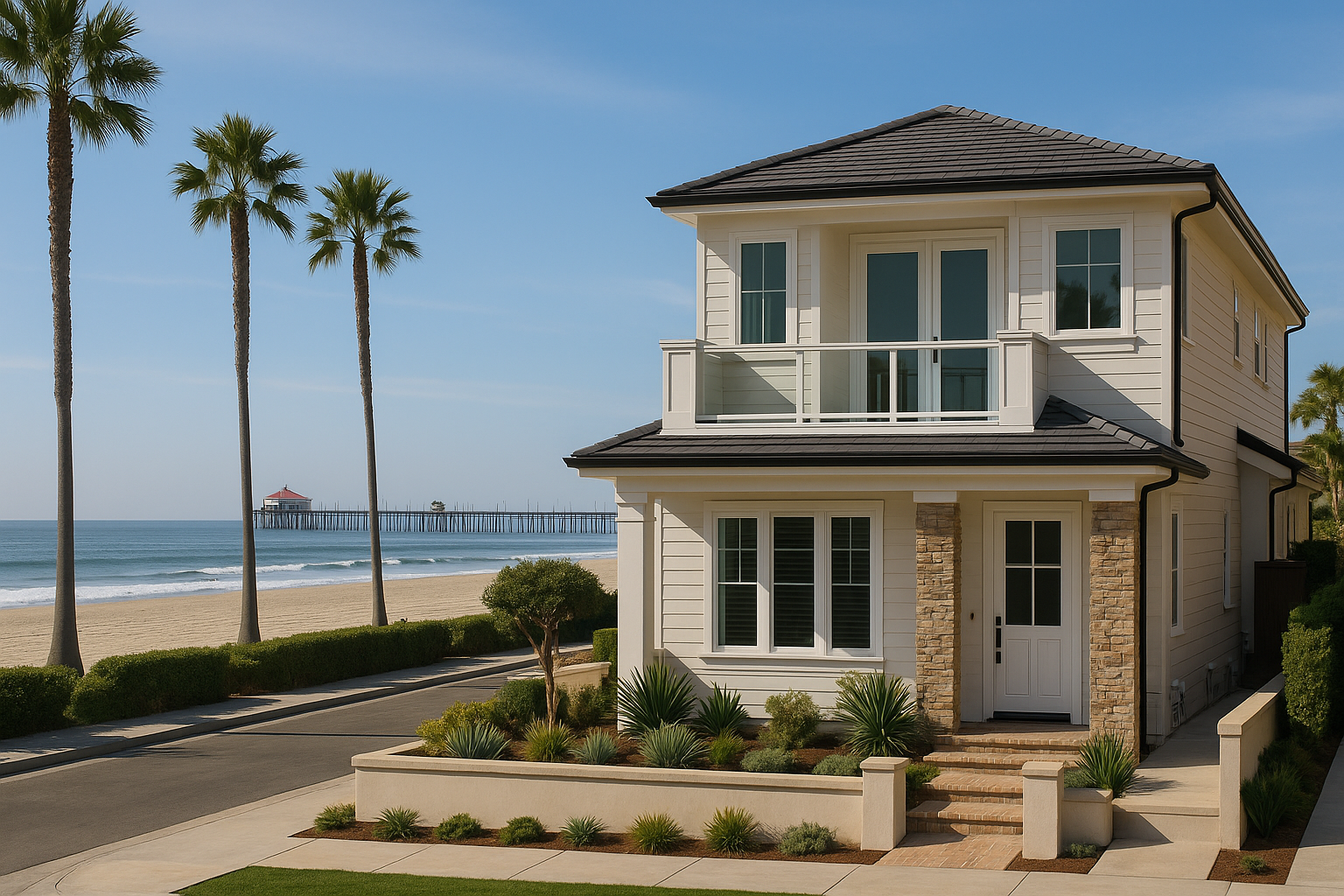
What should Bay Area buyers know about moving to Huntington Beach?
Moving to Huntington Beach from the Bay Area usually means a lower price per square foot than San Francisco, larger lots, and beach access, though coastal Orange County stays a high-cost market.
How does Huntington Beach pricing compare to the Bay Area?
The short version is that most Bay Area buyers find their dollars stretch further per square foot in Huntington Beach than in San Francisco, the Peninsula, or much of the South Bay, though nobody should mistake coastal Orange County for a bargain. Huntington Beach is still a high-cost, high-demand coastal market. What tends to change is what you get for a similar number: more single-family inventory, larger lots, and a shorter walk or drive to the sand.
Pricing moves quarter to quarter, so the smartest first step is to look at current per-foot data rather than a headline from two years ago. Sites like Redfin and the California Association of Realtors publish updated medians and price-per-square-foot figures for both regions, and comparing them side by side is a useful reality check before you fall in love with a specific neighborhood. Justin Ratowsky and Craig Ratowsky at Ratowsky Group work these numbers with relocating buyers all the time.
One thing to keep in mind: the Bay Area and Huntington Beach are both fragmented into micro-markets. A condo two blocks from the beach in the 92648 ZIP behaves very differently than an inland single-family home in 92646, just as SoMa behaves differently than Los Altos. General comparisons are a starting point, not a pricing strategy, so it is worth running specific comparables before you set a budget.
What does a Bay Area budget actually buy in Huntington Beach?
This is the question most relocating buyers really want answered. A budget that lands you a modest condo or a small, older single-family home on a compact lot in San Francisco or on the Peninsula often opens up a wider range of home types in Huntington Beach. That can mean a detached single-family home with a real yard, a townhome near the water, or in the upper tiers, harbor-front and near-oceanfront options.
Rather than quote numbers that go stale, think in categories. Entry pricing tends to live in condos and townhomes, mid-market covers a broad band of single-family homes across inland and central neighborhoods, and the top of the market runs through Huntington Harbour, waterfront estates, and near-oceanfront blocks. Ratowsky Group sells across that entire range, from condos to coastal-luxury homes up to $6.65M oceanfront, so the voice scales with the property.
Because your Bay Area equity often carries real weight here, it helps to map your budget to home type before you tour. The team's home value tool can frame the sell side of your move, and the buyer resources walk through what your number realistically reaches in Huntington Beach. If you want a broader look at the city itself, the Huntington Beach overview is a good orientation.
What home types and lot sizes will you find here?
Huntington Beach has a wider mix of home types than many Bay Area coastal towns, and the lots often run larger than what buyers are used to in San Francisco or the denser Peninsula neighborhoods. Detached single-family homes are common across the inland and central parts of town, which is a notable shift for anyone coming from a market where a small condo or a narrow lot was the norm at their price point.
Closer to the water, the mix shifts. Downtown and Old Town lean toward a blend of remodeled cottages, newer builds, and townhomes. Huntington Harbour is the waterfront enclave, built around islands like Trinidad, Davenport, Gilbert, Humboldt, and Admiralty, where some homes come with private docks. Sunset Beach and the near-oceanfront blocks bring their own logistics around lot depth, parking, and coastal setbacks.
If you are comparing home types across the city, the communities section breaks down neighborhoods, and buyers relocating for the first time often find the guide to buying a home in Huntington Beach helpful for understanding how these areas differ. The point is that home type and lot size vary a lot within the same ZIP, so it pays to tour a few contrasting neighborhoods early.
How is the weather and lifestyle different from the Bay Area?
The most immediate difference Bay Area transplants notice is the fog, or the lack of it. Huntington Beach gets its own marine layer, especially in late spring and early summer, but the climate skews warmer and drier overall than San Francisco's cool, wind-driven summers. If you are coming from the foggy west side of the city or a wind-tunnel Peninsula pocket, the change in light and temperature is real.
Lifestyle here is organized around the coast in a way that is hard to overstate. There is direct beach access along a long municipal stretch, a pier and downtown core, and outdoor recreation built into daily life. The city hosts a large 4th of July parade, and the local high school teams carry the Oilers name, small markers of a town with its own identity rather than a generic suburb.
None of this is about who should live here, just what the setting offers. If you value being near the water, trails, and coastal dining, Huntington Beach delivers that in a way the Bay Area's colder, more built-up coastline often does not. The trade-off is that you are moving into a different regional economy and traffic pattern, which is worth thinking through before you commit.
What about commuting and airport access from Huntington Beach?
Airport access is a big deal for buyers who keep ties to the Bay Area, whether for work, family, or a hybrid schedule. Huntington Beach sits within reach of John Wayne Airport (SNA) in Orange County, which runs frequent flights to Bay Area airports and is far smaller and easier to move through than the major hubs. For many relocating buyers, SNA becomes the default for quick trips back north.
Los Angeles International (LAX) is the other option and offers broader route coverage, though it is a longer drive and a heavier airport experience. Between the two, most commuters find SNA covers routine Bay Area runs and reserve LAX for wider destinations or specific fares. You can check current routes and schedules directly through John Wayne Airport before you plan around a particular flight.
Ground commuting is its own consideration. Orange County traffic is real, and drive times to job centers vary widely by time of day, so if you will be commuting to a physical office anywhere in the region, test the actual route at the actual hour before you settle on a neighborhood. The market page is a good place to watch conditions as you plan the timing of your move.
Can you keep working remotely from Huntington Beach?
Plenty of buyers make this move specifically to hold a Bay Area salary while living on the Orange County coast, and the setup works for many. Remote and hybrid work is common here, and the practical requirements are the same ones you would evaluate anywhere: reliable internet, a workable home office layout, and a floor plan that gives you a real place to focus.
When you tour homes, look at the floor plan through a work-from-home lens. A flexible room, a converted den, or a bedroom that can serve as an office often matters more day to day than square footage on paper. If you are on frequent video calls, natural light and a quiet primary work space are worth prioritizing over showier features.
One honest note: if your employer treats your work location or compensation differently based on where you live, that is a conversation to have with them directly, and any tax questions tied to a cross-state or cross-region move belong with a licensed tax professional. Ratowsky Group can help you find a home that fits the work life; the financial specifics are for the right advisor.
Which Huntington Beach neighborhoods should Bay Area buyers explore first?
No single neighborhood is right for everyone, and the honest answer depends on your budget, home type, and how close to the water you want to be. That said, a few areas come up again and again with relocating buyers because they represent the range of what the city offers. Use this as a starting map, not a ranking of quality.
Justin grew up all over Huntington Beach, from North HB near the wetlands to Central Park, Downtown, and Old Town, so the team can speak to how these areas actually differ block to block. Here is a scannable orientation to explore early:
- Downtown and Old Town: walkable to the pier and shops, a mix of remodeled cottages, newer builds, and townhomes, generally a higher per-foot cost for the proximity.
- Huntington Harbour: the waterfront enclave built around islands like Trinidad and Davenport, where some homes include private docks and boat access.
- Central and inland neighborhoods (parts of 92646 and 92647): where more detached single-family homes with larger lots and yards tend to show up at mid-market pricing.
- North Huntington Beach near the wetlands and Central Park: green space and trails close by, with a range of home vintages.
- Sunset Beach: the coastal stretch along PCH toward the Seal Beach line, a small beach community with its own character and coastal-lot considerations.
- Brightwater and newer coastal developments: more recently built homes for buyers who want less immediate renovation work.
What should you budget for beyond the purchase price?
Bay Area buyers are used to high carrying costs, but the categories shift a bit in coastal Orange County. Property taxes in California follow the same Proposition 13 framework statewide, so your assessed value and rate structure work the way you already understand, though your new basis resets at purchase. Beyond taxes, the big line items to plan for are HOA dues, insurance, and any deferred maintenance on older coastal homes.
Homeowners association dues matter most with condos, townhomes, and some planned communities, and they vary widely by building and what the dues cover. Reviewing HOA documents carefully is part of a smart purchase, since reserves, rules, and pending assessments all affect the true cost of ownership. Insurance is the other coastal wrinkle, because proximity to water and flood zones can influence coverage and premiums.
For homes near the water, factor in condition and coastal exposure. Salt air, seawalls on harbor properties, and older systems can all mean maintenance planning. The team walks relocating buyers through these logistics rather than glossing over them, and a direct conversation with Craig and Justin is the best way to pressure-test a specific home's carrying costs before you write an offer.
How competitive is the Huntington Beach market for buyers?
Bay Area buyers know competitive markets, and Huntington Beach can move fast on well-prepared, well-priced homes, especially near the water. Demand for the right property is real, and multiple-offer situations happen, so coming in prepared matters. That means having your financing lined up and understanding the specific comparables for the home you want.
The team's own listings show how quickly demand can concentrate on a standout property. A recent example: 3801 Seascape Drive on Trinidad Island in Huntington Harbour was estimated around $2.45M and sold for $3,925,000, drawing 12 offers, 8 of them all cash, in 8 days on market, roughly $643K over asking. Not every home moves that way, but it shows what focused demand looks like in the right pocket of the city.
For relocating buyers, the practical takeaway is to be ready. Watch inventory on the market page, get clear on your budget and home type early, and lean on local guidance so you can act with confidence rather than react. Ratowsky Group has helped buyers on 48 buyer-side transactions among the group's broader track record, and that experience shows up in how they prepare relocating clients.
What are the steps to relocate from the Bay Area to Huntington Beach?
Relocations run smoother with a sequence rather than a scramble. Every move has its own wrinkles, but the general path below covers what most Bay Area buyers work through when moving to Huntington Beach. Treat it as a framework and adjust for your timeline.
The order matters more than the calendar. Selling and buying can overlap, and financing conversations should start early so you know your real number before you tour.
- Clarify your budget and home type: map your Bay Area equity and target price to condos, townhomes, or single-family homes in Huntington Beach.
- Get financing sorted early: talk with local mortgage lenders about pre-approval so your budget is real, not a guess.
- Scout neighborhoods on a visit: tour a few contrasting areas, from Downtown to inland single-family pockets to Huntington Harbour, before narrowing down.
- Test your commute and airport routine: check SNA and LAX access and drive any regular route at the actual hour you would travel.
- Run the true carrying costs: factor in HOA dues, insurance, and coastal maintenance alongside the purchase price.
- Coordinate the sell and buy timing: if you are selling a Bay Area home, align the two transactions with your agent so you are not caught between them.
- Line up local guidance: work with a team that knows the micro-markets so you can move quickly when the right home appears.
Why work with a local team on a cross-market move?
Relocating from one high-cost coastal market to another is not the same as a routine local purchase. You are learning new neighborhoods, new logistics, and new pricing patterns all at once, often on a compressed timeline. A team rooted in the area can save you from expensive assumptions and help you read what a listing really means.
Ratowsky Group brings 58 years of combined experience across Huntington Beach and coastal Orange County, with Craig selling since 1977 and Justin licensed since 2017. Justin is a third-generation California Realtor through his grandmother on his mother's side, Maurine, and both are founding agents of Compass Huntington Beach. About half the group's business is in Huntington Beach itself, which is the real proof behind the local knowledge.
Old-school relationships and new-school systems is the whole idea. For relocating buyers, that combination means honest guidance on neighborhoods and pricing plus the tools to move fast when it counts. If you are weighing a move, a low-pressure conversation with the team is a useful first step, no commitment required.
One verified number worth knowing: 3801 Seascape Drive, Trinidad Island, Huntington Harbour: estimated around $2.45M, sold for $3,925,000, roughly $643K over asking: 12 offers, 8 all cash, 8 days (source: Ratowsky Group at Compass, verified sale).
As Justin Ratowsky, Realtor, DRE #02026158, Ratowsky Group at Compass puts it: "Huntington Beach doesn't show up the same way in every neighborhood. The block I grew up on feels different than Huntington Harbour, which feels different than Sunset Beach. When you're moving here from somewhere else, that local read is what keeps you from paying for the wrong thing."
Sources
Frequently asked questions
- Is Huntington Beach cheaper than the Bay Area?
- For many buyers, Huntington Beach costs less per square foot than San Francisco or the Peninsula, and your budget often reaches more single-family inventory and larger lots. That said, coastal Orange County is still a high-cost market, not a discount one. Compare current per-foot data on Redfin or C.A.R. before setting expectations.
- What does a Bay Area budget buy in Huntington Beach?
- A budget that buys a modest condo or small lot in the Bay Area often opens up a wider range of home types in Huntington Beach, from detached single-family homes with yards to townhomes near the water. The top tiers include Huntington Harbour and near-oceanfront homes. Mapping your number to home type before touring keeps the search focused.
- How far is Huntington Beach from John Wayne Airport?
- Huntington Beach sits within reach of John Wayne Airport (SNA) in Orange County, which offers frequent flights to Bay Area airports and is smaller and easier to navigate than major hubs. LAX is a longer drive with broader route coverage. Check current schedules through John Wayne Airport before planning around a specific flight.
- Can you work remotely from Huntington Beach with a Bay Area job?
- Yes, many buyers relocate specifically to keep a Bay Area role while living on the Orange County coast. Reliable internet and a workable home office layout matter most, so evaluate floor plans with a work-from-home lens. Any questions about how your location affects pay or taxes belong with your employer and a licensed tax professional.
- What are the best neighborhoods in Huntington Beach for relocating buyers?
- It depends on your budget, home type, and how close to the water you want to be. Downtown and Old Town offer walkability near the pier, Huntington Harbour is the waterfront enclave with docks, and inland areas in ZIPs like 92646 and 92647 tend to have larger single-family lots. Touring a few contrasting areas early is the best way to decide.
- What extra costs should Bay Area buyers plan for in Huntington Beach?
- Beyond the purchase price, plan for HOA dues on condos and some communities, insurance that can be affected by coastal and flood-zone proximity, and maintenance on older or waterfront homes. California property taxes follow the same Prop 13 framework you know, though your basis resets at purchase. Review HOA documents and carrying costs carefully before making an offer.
Topics
- best Huntington Beach realtor
- best Huntington Beach real estate agent
- Huntington Beach realtor
- Huntington Beach real estate agent
- Huntington Beach real estate broker
- Ratowsky Group
- Justin Ratowsky realtor
- Justin Ratowsky Huntington Beach realtor
- Compass Huntington Beach