
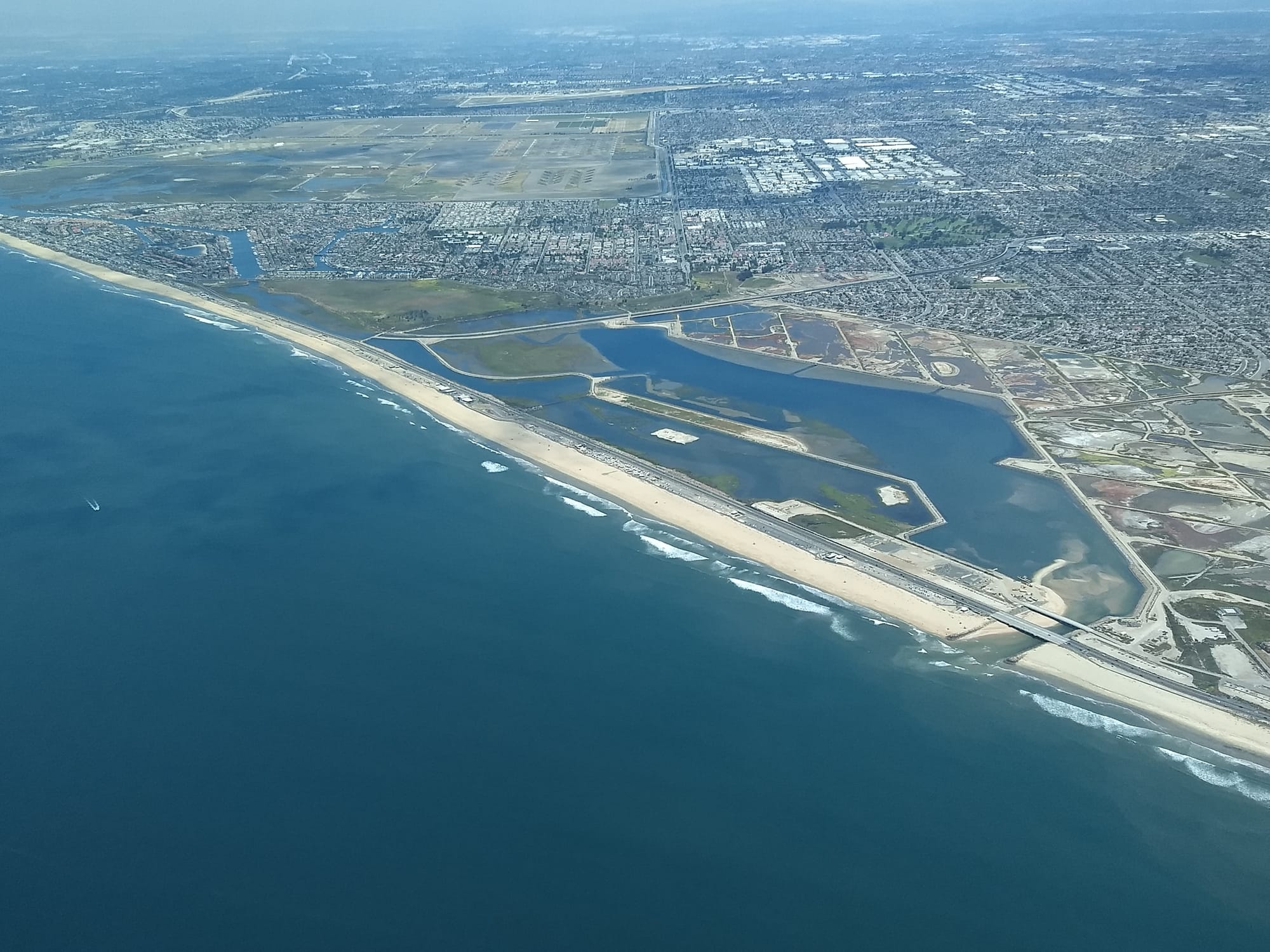
Bolsa Chica Ecological Reserve: Trails, Birding and Tips
A plain-English visitor guide to the Bolsa Chica Ecological Reserve, one of the largest coastal saltwater marshes in Southern California, right in Huntington Beach.
Direct answer
The Bolsa Chica Ecological Reserve is a 1,300-acre coastal wetland in Huntington Beach, open daily with free parking off PCH, a loop trail, boardwalk, and year-round birdwatching in coastal Orange County.
Updated 2026-11-10
What is the Bolsa Chica Ecological Reserve?
The Bolsa Chica Ecological Reserve is a roughly 1,300-acre coastal wetland on the inland side of Pacific Coast Highway in Huntington Beach. It is managed by the California Department of Fish and Wildlife and sits between the mainland Huntington Beach neighborhoods and the ocean, which is part of what makes it feel like a pocket of quiet right off a busy highway. You come here to walk the trails, watch birds, and see one of the larger restored saltwater marshes on the Southern California coast.
The reserve is more than open space. It is an active tidal system, with a full tidal inlet that connects the marsh to the ocean and moves saltwater in and out with the tides. That water exchange is what supports the fish, invertebrates, and the birds that feed on them. When people in town say Bolsa Chica, they sometimes mean the state beach across the highway and sometimes mean the wetland, so it helps to know the reserve is the inland marsh.
If you are getting oriented to the area, Bolsa Chica is one of several natural anchors that shape this part of Huntington Beach. You can read more about the wider area and its neighborhoods on the Huntington Beach overview and the communities page.
Where is the reserve and how do you get there?
The main entrance sits along Pacific Coast Highway in Huntington Beach, roughly across from Bolsa Chica State Beach. The reserve stretches north toward Warner Avenue and the edge of Sunset Beach, so there is more than one way to reach the trails depending on where you start. Most first-time visitors use the PCH lot because it drops you right at the footbridge over the tidal inlet.
There is a free parking lot off Pacific Coast Highway, which is a big part of why the reserve is easy to fold into a morning or an afternoon. The lot can fill on weekend mornings during peak birding season, so arriving early is the simplest way to get a spot. A second access point near Warner Avenue gives you an alternate entry if the main lot is busy.
The reserve is in the 92649 ZIP code area of Huntington Beach, close to the Sunset Beach line and a short drive from Huntington Harbour. That central coastal location in Orange County is one reason it draws both local walkers and birders from across the region.
What are the trails like, and are they accessible?
The best-known route is the loop trail that starts at the PCH entrance, crosses the wood footbridge over the tidal inlet, and circles a section of the marsh. It is a flat, mostly level walk on dirt and gravel paths, which makes it approachable for a wide range of walking abilities. A boardwalk section carries you out over the water so you can look down into the channel and across the open marsh.
The full loop is a relatively short walk, generally in the range of a mile and a half, and you can shorten or extend it by connecting to the mesa trails and the paths that run north toward Warner Avenue. Because the terrain stays flat, the main constraint is surface rather than grade, so firm closed shoes help after rain when some stretches hold moisture.
There is no shade along most of the route, so the trail reads very differently at 8 a.m. than it does at noon in summer. If you want more structured walking content for the surrounding area, the Huntington Beach guide covers how the coast and the inland neighborhoods connect.
What birds and wildlife can you see at Bolsa Chica?
Bolsa Chica is one of the better bird-viewing spots on the Orange County coast because the mix of open water, mudflats, and nesting islands supports a wide range of species through the year. On a typical walk you might see herons and egrets working the shallows, cormorants drying their wings, and shorebirds probing the mudflats at low tide. Raptors turn up over the mesa, and ducks and grebes gather on the open water in the cooler months.
The reserve is especially known for its nesting islands, which are built up to give terns and black skimmers protected places to raise young away from ground predators. California least terns and other colonial nesters use these islands in the warm months, and the activity around them is one of the signature sights of a late-spring or summer visit. Signage asks visitors to keep their distance during nesting season, which protects the colonies and still lets you watch from the trail.
Beyond birds, the tidal channels hold fish and invertebrates that the birds depend on, and the marsh functions as a nursery for ocean species. The California Department of Fish and Wildlife manages the reserve specifically to protect this habitat, so the wildlife you see is the whole point of the place rather than a backdrop.
When is the best time for birdwatching?
There is no single best time, because different seasons bring different birds. That said, a few patterns make planning easier, and they line up with tides and migration more than with any secret window.
Here is a simple way to think about timing a visit for birds:
- Early morning, year-round: light is soft, the air is calm, parking is open, and bird activity is usually highest right after sunrise.
- Low tide: exposed mudflats concentrate shorebirds feeding, so checking a tide chart before you go can make a real difference in what you see.
- Fall and winter: migrating and wintering waterfowl, shorebirds, and raptors move through and settle in, often making the cooler months the most varied for species counts.
- Late spring into summer: the tern and skimmer nesting season brings the islands to life, which is the main draw for warm-weather visits.
- Spring and fall migration: the shoulder seasons can produce surprises as birds pass along the Pacific coast, so patient walkers are sometimes rewarded with less common sightings.
What does the interpretive center offer?
The Bolsa Chica Conservancy operates an interpretive center near the Warner Avenue side of the reserve. It is a good first stop if you want context before you walk, with exhibits on the wetland, its wildlife, and the long restoration effort that shaped the marsh you see today. The center is a nonprofit education hub rather than a government office, which is why its hours and programs are set by the conservancy.
The conservancy runs guided walks, volunteer programs, and school and community education, so if you time a visit to a scheduled walk you get a naturalist pointing out birds and explaining the tidal system as you go. Checking the conservancy's current calendar before you drive over is the reliable way to confirm hours and any program you want to join.
For families and first-time visitors, the center and a slow loop walk make a complete half-day. If you are newer to the area and want to understand how spots like this fit into daily life in town, the communities overview is a useful companion.
How does the reserve pair with Bolsa Chica State Beach?
The reserve and Bolsa Chica State Beach sit on opposite sides of Pacific Coast Highway, which makes it easy to combine wetland and ocean in one outing. The reserve is the inland marsh with the trails and birding; the state beach is the long sandy stretch with surf, fire rings, and a paved path. California State Parks manages the beach, and it operates on its own parking fees and hours, separate from the reserve's free lot.
A common rhythm is to walk the reserve loop early while birds are active, then cross over to the beach for the second half of the day. The two give you very different versions of the same coastline, one quiet and marshy, the other open and oceanfront. The paved beach path also connects south toward the Huntington Beach pier area for anyone who wants a longer ride or walk.
Because the beach and reserve are run by different agencies, parking rules differ. The reserve lot is free, while the state beach charges for its lots, so plan accordingly if you intend to do both.
What should you bring and know before you visit?
A visit to Bolsa Chica is low-cost and low-complexity, but a few basics make it much better, especially for birding. Because the trail is exposed and the wildlife is the attraction, small preparation goes a long way.
Here is a practical checklist for a comfortable, respectful visit:
- Binoculars or a spotting scope, since much of the best viewing is across water and onto the nesting islands.
- Sun protection and water, because there is little to no shade along the loop.
- Closed, comfortable shoes for dirt and gravel paths that can stay damp after rain.
- A tide chart check, so you can aim for low tide when shorebirds concentrate on the mudflats.
- Leashed pets left at home, as dogs are not permitted in the ecological reserve to protect nesting and feeding wildlife.
- Patience and distance during nesting season, keeping to the trail and honoring posted signs around the tern and skimmer islands.
- A plan to pack out what you bring in, since keeping the marsh clean protects the water quality the birds depend on.
Why does the Bolsa Chica wetland matter ecologically?
The reserve is one of the larger remaining coastal wetlands in Southern California, a habitat type that was heavily reduced across the region over the last century. Wetlands like Bolsa Chica filter water, buffer the coast, and provide nursery habitat for fish and feeding and nesting grounds for birds, which is why the restoration work here drew statewide attention. The full tidal restoration that reconnected the marsh to the ocean was a major public project aimed at bringing that function back.
For the many species that use the Pacific Flyway, protected stopover and wintering habitat along the coast is limited, so a marsh of this size concentrates a lot of activity. That is part of why birders travel to Huntington Beach specifically for Bolsa Chica, and why the nesting islands are managed so carefully.
Understanding the ecology also helps you be a better visitor. When you know the mudflats are a feeding station and the islands are a nursery, the signs asking you to keep your distance make sense, and your visit does less to disturb the wildlife you came to see.
What does living near Bolsa Chica mean in the Huntington Beach market?
Natural anchors shape how a coastal area feels and how its homes trade, and in Huntington Beach the reserve is one of those anchors alongside the harbour, the pier, and the state beaches. Homes in the Bolsa Chica area and nearby neighborhoods benefit from direct access to the trails and the quiet of the wetland, which is a different draw than the surf scene downtown. That variety is a big reason the 92649 and 92648 parts of Huntington Beach appeal to such a wide range of buyers across Orange County.
Justin Ratowsky was born and raised in Huntington Beach, and Ratowsky Group works across all property types in Huntington Beach and coastal Orange County. If you are weighing a move near the wetland or elsewhere in town, compare location, access, and current inventory against your goals. You can start with the buyer resources or the buying a home in Huntington Beach guide.
For a broader read on conditions, the market page tracks the local picture, and if you own near the reserve and are curious about value, the home value tool is a no-pressure starting point. When you want a real conversation about a specific street or home, reach out to Craig and Justin.
Frequently asked
Bolsa Chica Ecological Reserve: Trails, Birding and Tips, the questions we hear first.
Is the Bolsa Chica Ecological Reserve free to visit?
How long is the Bolsa Chica loop trail?
Can you bring dogs to the Bolsa Chica Ecological Reserve?
What is the difference between the reserve and Bolsa Chica State Beach?
When is the best time to see nesting terns and skimmers?
Where do you park for the Bolsa Chica wetlands?
Your Huntington Beach real estate team
Craig and Justin Ratowsky.
Craig Ratowsky and Justin Ratowsky are equal partners at Ratowsky Group, principal agents with Compass, and founding members of the Compass Huntington Beach office. Craig has sold Huntington Beach real estate since 1977, bringing 49 years of pricing and negotiation experience. Justin is a third-generation California Realtor® focused on local guidance and modern marketing. Together, they bring 58+ years of combined experience.
Sources & local citations
- California Department of Fish and Wildlife, Bolsa Chica Ecological Reserve
- Bolsa Chica Conservancy (interpretive center and programs)
- California State Parks, Bolsa Chica State Beach
Qualitative claims framed as agent insight reflect Ratowsky Group’s direct experience and are not represented as third-party verified data.
Start the search
Exploring the Bolsa Chica area?
If walking the reserve has you thinking about the neighborhoods around it, compare how location, access, and inventory line up near the Huntington Beach wetlands. It is a local, no-pressure conversation whenever you are ready. Reach out through the contact page.
Ratowsky Group at Compass. Craig Ratowsky DRE #00608046, Justin Ratowsky DRE #02026158. Guidance is general market context, not a valuation, tax, or legal advice.