
Blog · Buyer guide
What Is the Weather Like in Huntington Beach?
A relocation-research guide to Huntington Beach's mild coastal climate, its seasons, and the marine layer known as June Gloom.
September 25, 2026 · 9 min read
By Craig Ratowsky, Principal agent, Ratowsky Group at Compass
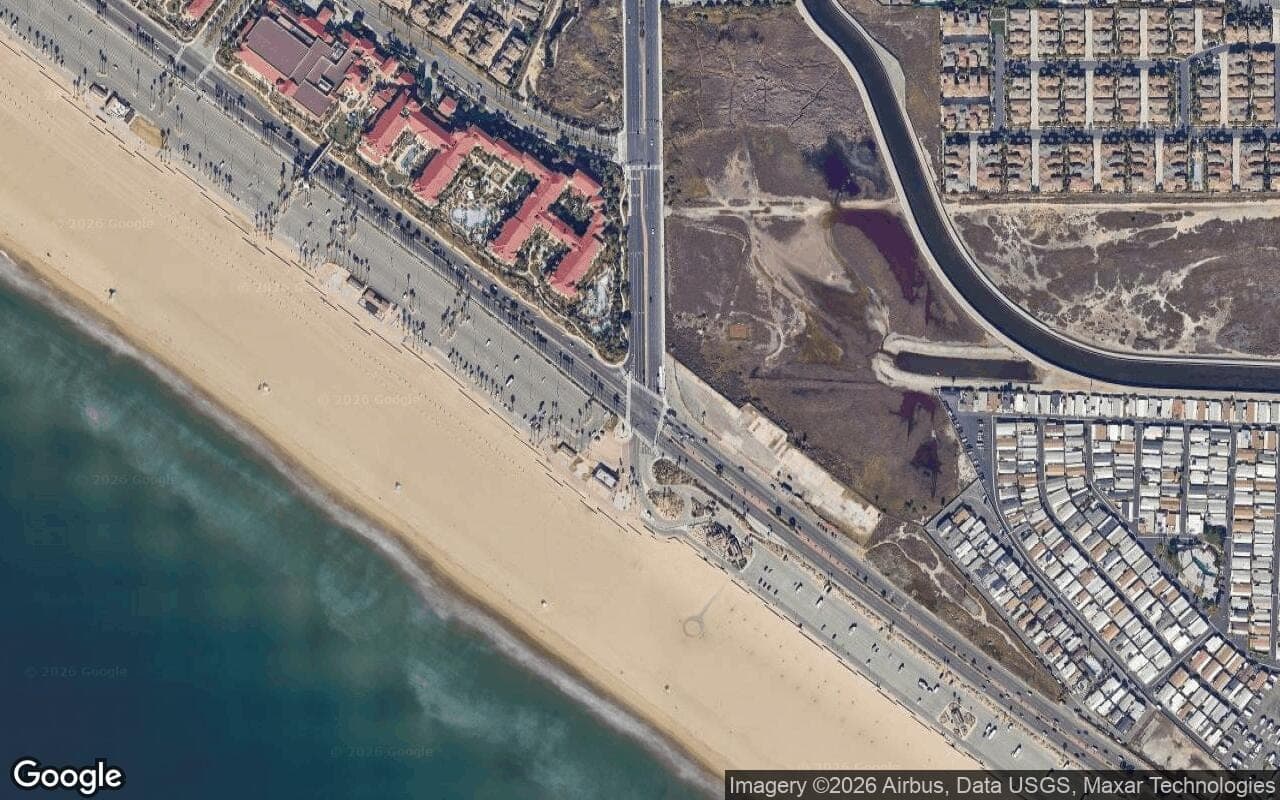
Huntington Beach has a mild Mediterranean coastal climate with warm dry summers, gentle winters, low rainfall, and a spring marine layer called June Gloom. The Pacific keeps temperatures moderate.
What kind of climate does Huntington Beach have?
Huntington Beach sits in a Mediterranean coastal climate zone, the same broad category you find along much of the Southern California shoreline. That means two main seasons rather than four: a warm, dry stretch that runs from late spring into fall, and a cooler, wetter stretch through winter. Extreme heat and hard freezes are both uncommon along the coast here.
The single biggest factor is the Pacific Ocean, which sits right at the city's western edge. Water changes temperature slowly, so the ocean acts like a giant thermostat. It cools the shoreline on hot inland days and holds warmth on cool nights, which keeps the daily swing in Huntington Beach smaller than what you feel a few miles inland.
For anyone researching a move to Orange County, this is the short version: the weather is mild, sunny most of the year, and rarely dramatic. The details worth knowing are the marine layer, the low rainfall, and how quickly conditions can shift between the coast and the inland parts of the county.
What are summers like in Huntington Beach?
Summers in Huntington Beach are warm and dry, but the coast rarely bakes. Afternoon highs typically land in the mid-70s to low 80s Fahrenheit, and the ocean breeze usually builds in the afternoon to take the edge off. Nights cool down comfortably, often into the low-to-mid 60s.
Because the water moderates the air, the shoreline stays cooler than the neighborhoods a few miles east. On a day when inland Orange County pushes into the 90s, the sand and the streets near the pier can sit ten or more degrees cooler. That gap is one reason the beaches fill up on hot days.
Rain is close to nonexistent through the summer months. Skies are generally clear by midday once any morning cloud burns off, and long stretches of dry, bright afternoons are the norm from July through September. If you want a sense of how the season shapes local life, the Huntington Beach community pages walk through the neighborhoods that trade on that reliable coastal summer.
What are winters like in Huntington Beach?
Winters here are mild by almost any national standard. Daytime highs commonly sit in the low-to-mid 60s, and even the coldest nights usually stay above freezing, dipping into the mid-to-upper 40s during a cold snap. Frost is rare right at the coast, and snow is effectively unheard of.
Winter is also the wet season. Most of the region's limited annual rainfall arrives between roughly November and March, usually in a handful of Pacific storm systems rather than steady, day-after-day rain. Between systems, you often get clear, crisp, comfortable days.
The mildness means outdoor time continues year round. Surfing, walking the beach path, and dining outside are all normal winter activities in Surf City, which is part of what draws relocation research to this part of coastal Orange County. To understand how that steady demand shapes home values through the calendar, the local market overview is a useful starting point.
What is June Gloom and the marine layer in Huntington Beach?
June Gloom is the local nickname for a stretch of gray mornings that is most common in late spring and early summer. It comes from the marine layer, a shallow blanket of cool, moist ocean air that gets trapped under warmer air above it. That layer condenses into low clouds and coastal fog, and it tends to sit right over the shoreline overnight and into the morning.
The pattern is strongest from about May into July, which is where the June name comes from, though thinner versions show up in other months too. A typical June Gloom day starts overcast and cool, then the clouds thin and break as the sun heats the ground. By early afternoon it is often clear and bright, especially a short distance inland.
June Gloom is not a storm or a hazard. It is simply low cloud cover, and many longtime residents appreciate the cooler, softer mornings it brings before the clear afternoons arrive. If you plan a beach day during the season, the middle of the day is generally the safe bet for sun near the Huntington Beach pier.
How much does it rain, and how sunny is Huntington Beach?
Rainfall along coastal Orange County is low. Totals in this stretch of the coast generally run in the low double digits of inches per year, well under the national average, with the great majority falling in the winter months. Because the rain is concentrated in a few storms, long dry spells are the norm the rest of the year.
Sunshine is abundant. Coastal Southern California is known for a high number of clear and partly clear days annually, and Huntington Beach shares that pattern. Even during June Gloom, the gray usually clears to sun by afternoon, so the practical amount of usable daylight stays high across the calendar.
For current, station-level rainfall and temperature records, the National Weather Service and NOAA's climate data archives are the most reliable public sources. They are worth checking against any single number you see online, since coastal microclimates can vary block by block.
How does the Pacific Ocean moderate temperatures across the city?
Water holds and releases heat slowly, and the Pacific is right against Huntington Beach's western boundary. That proximity is why the daily and seasonal temperature swings here are gentle compared with the inland valleys of Orange County. The ocean cools you when it is hot and warms you when it is cold.
The effect fades with distance from the water. Neighborhoods closest to the shore, including areas near the pier, downtown, and Huntington Harbour, feel the strongest ocean influence and the most consistent breeze. Homes farther east still enjoy a mild climate but tend to run a few degrees warmer on hot afternoons and cooler on clear nights.
This is a real microclimate story, not marketing. As Craig Ratowsky, who has sold real estate in this area since 1977, and Justin Ratowsky, a third-generation California Realtor, often note, the feel of a block near the water differs from one a mile inland. If you are weighing where in the city to look, the buyer resources and the guide to buying a home in Huntington Beach help frame those tradeoffs.
What are the main factors that shape Huntington Beach weather?
A handful of forces explain almost everything you will experience day to day. Here they are in plain terms, ranked roughly by how much they drive the local pattern.
- The Pacific Ocean: the primary moderator, keeping the coast cooler in summer and warmer in winter than inland Orange County.
- The marine layer: cool ocean air trapped under warm air, producing morning clouds and fog, especially the May-to-July June Gloom stretch.
- The Mediterranean rainfall pattern: a dry warm season and a wetter winter, with most precipitation in a few storms between roughly November and March.
- The afternoon sea breeze: a reliable onshore wind that builds through the day, cooling the shoreline and clearing morning clouds.
- Distance from the water: the closer to the beach, the smaller the temperature swing and the stronger the breeze; a few miles inland means warmer highs and cooler nights.
- Santa Ana winds: occasional dry offshore winds, most common in fall, that can push warm inland air to the coast and briefly reverse the usual cooling.
How does the weather compare from the coast to inland Orange County?
The most useful comparison for anyone relocating is coast versus inland, because it is where the climate actually changes. Right at the Huntington Beach shoreline, temperatures are steadier, mornings are grayer during June Gloom, and the breeze is stronger. A short drive inland trades some of that consistency for more sun earlier in the day and warmer summer afternoons.
In practical terms, that means the beach can be cool and overcast in the morning while an inland neighborhood is already clear and warm, and the same coast can be pleasant on an afternoon when inland areas are hot. Neither is better; they suit different routines and preferences.
Within the 92648 and 92649 ZIP codes alone, you can feel the difference between a home near the water and one closer to the eastern edge of the city. The communities overview breaks down how the neighborhoods sit relative to the coast, which is a big part of the climate you will live with every day.
How does climate shape daily life and outdoor time in Surf City?
The steadiness of the weather is the point. Because extreme heat, hard cold, and heavy rain are all uncommon, outdoor activity runs nearly year round in Huntington Beach. Surfing, cycling the beach path, running, and outdoor dining are normal in January as much as July.
The seasons still have their own character. Late spring brings the soft gray June Gloom mornings, summer delivers long clear afternoons and the strongest crowds, fall often has some of the warmest, clearest coastal days of the year, and winter mixes crisp bright stretches with the occasional Pacific storm.
This reliability is one reason coastal Orange County holds steady buyer interest. Weather is not the only driver of a housing decision, but a climate you can plan your life around is a genuine part of the appeal. For homes where the water and the weather are central to the property itself, the waterfront homes guide covers what to look at.
How should the local climate factor into a home search here?
Climate should inform where you look, not just whether you look. Because the ocean's influence fades with distance, two homes in the same city can offer noticeably different daily conditions. If cooler, breezier mornings and steadier temperatures matter to you, proximity to the water carries weight; if you want the most morning sun during June Gloom, a spot farther inland may fit better.
Weather also touches practical property questions. Coastal air, sun exposure, drainage during winter storms, and the orientation of outdoor living space all deserve attention during a home search near the beach. These are property-specific details worth reviewing in person rather than guessing at from a listing photo.
Justin Ratowsky sums up the team's approach simply: "We treat you like family and your investment like our own." If you want help matching a Huntington Beach neighborhood to the climate and lifestyle you are after, you can start a low-pressure conversation through the contact page.
A data point worth holding onto. Combined Huntington Beach and Orange County real estate experience for Craig and Justin Ratowsky (Craig selling since 1977, Justin licensed since 2017): 58 years (source: Ratowsky Group at Compass).
As Justin Ratowsky, Realtor, Ratowsky Group at Compass, DRE #02026158 puts it: "We treat you like family and your investment like our own."
Sources
Frequently asked questions
- Does it ever get cold in Huntington Beach?
- Not by most standards. Winter daytime highs usually sit in the low-to-mid 60s, and even cold nights generally stay above freezing, dipping into the mid-to-upper 40s. Frost at the coast is rare and snow is effectively unheard of.
- What months have the best weather in Huntington Beach?
- Many residents point to late summer and fall, roughly September and October, when the marine layer is thin and clear, warm coastal days are common. Spring is pleasant too, though May and June often bring the June Gloom morning cloud cover before the afternoons clear.
- When is June Gloom in Huntington Beach?
- June Gloom is most common from about May into July, which is where the name comes from. It shows up as gray, cool mornings from the marine layer that usually break into sun by early afternoon. Thinner versions can appear in other months as well.
- Does it rain a lot in Huntington Beach?
- No. Annual rainfall in this stretch of coastal Orange County is low, generally in the low double digits of inches, and most of it falls in a handful of winter storms between roughly November and March. Long dry stretches are the norm the rest of the year.
- Is the ocean warm enough to swim in Huntington Beach?
- Ocean temperatures vary by season, running cooler in winter and warming through the summer into early fall, when the water is most comfortable for swimming and surfing. Many surfers wear wetsuits year round for the cooler months. Check current conditions before you go.
- What is the hottest part of the year in Huntington Beach?
- Late summer, roughly August into September, tends to bring the warmest coastal days, with highs often in the low 80s. Occasional fall Santa Ana winds can also push warm, dry inland air to the coast and briefly raise temperatures. The afternoon sea breeze usually keeps the shoreline milder than inland areas.
Topics
- best Huntington Beach realtor
- best Huntington Beach real estate agent
- Huntington Beach realtor
- Huntington Beach real estate agent
- Huntington Beach real estate broker
- Ratowsky Group
- Justin Ratowsky realtor
- Justin Ratowsky Huntington Beach realtor
- Compass Huntington Beach