
Journal · Buyer guide
Fountain Valley Housing Market Trends
A grounded, source-backed look at where the Fountain Valley housing market sits and how to read it before you buy or sell.
August 25, 2026 · 12 min read
By Justin Ratowsky, Realtor®, Ratowsky Group at Compass
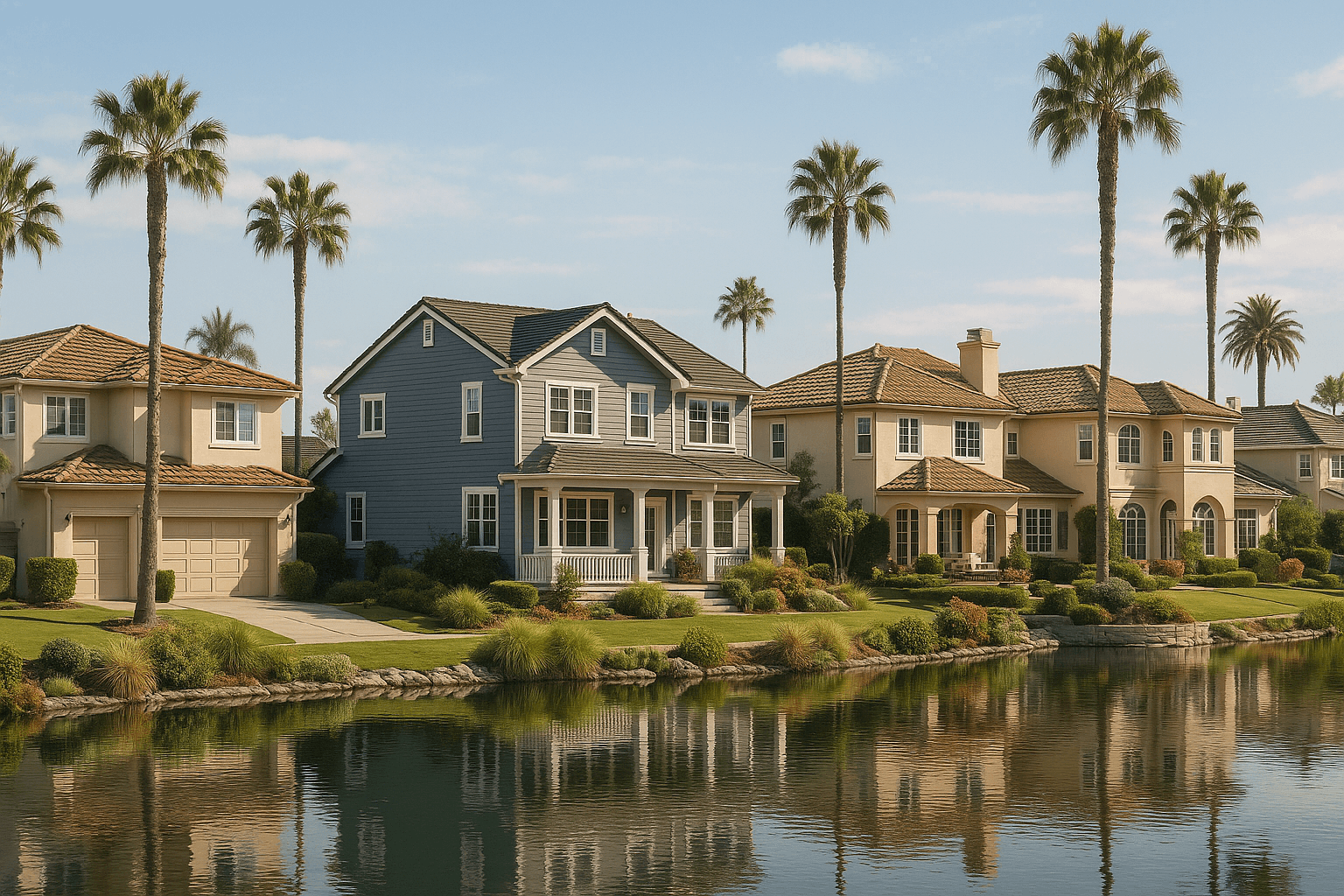
What are the current Fountain Valley housing market trends?
As of August 2026, the Fountain Valley housing market in Orange County (92708) stays supply-tight, with prices driven by inventory, days on market, and mortgage rates. Check C.A.R. and Redfin for live numbers.
What are Fountain Valley housing market trends as of August 2026?
As of August 2026, the Fountain Valley housing market in Orange County remains defined by tight supply and steady demand, which tends to keep pricing firm even when national headlines turn choppy. Prices track closely with inventory levels, days on market, and where mortgage rates land in a given week. Fountain Valley (ZIP 92708) usually moves in smaller steps than the beach cities right next door, so the swings are less dramatic in either direction.
The most honest answer to "where is the market" is that it depends on the month you are reading, and any specific price or percentage should come from a live source rather than an article that ages. That is why Justin and Craig Ratowsky point people to primary data from the California Association of Realtors, Redfin, and Freddie Mac, then interpret it against what they see on the ground in this specific ZIP code.
This piece walks through the pieces that actually move the Fountain Valley market: price direction, how much is for sale, how fast homes sell, whether buyers or sellers hold leverage, and how the rate environment feeds all of it. For a snapshot on your own timeline, the Ratowsky Group market page keeps context current, and the home value tool gives you a starting read on a specific property.
Which direction are Fountain Valley home prices heading?
Price direction in Fountain Valley is best read as a range, not a single number, and it moves with supply more than anything else. When active listings stay low relative to buyer demand, well-prepared homes tend to hold their value and sometimes see competition. When more inventory arrives or rates climb, buyers gain a little room and price growth cools. The California Association of Realtors publishes county and regional median price data that captures this shift over time.
Orange County as a whole has carried some of the highest median prices in California, and Fountain Valley sits inside that dynamic while generally pricing below the immediate coastal cities. That relative value is part of why the 92708 market stays active. Buyers who get priced out of Huntington Beach or Newport frequently look inland a few miles and find more square footage per dollar.
Ratowsky Group treats a single month's median with caution, because a handful of high or low sales can pull it around in a smaller city. The more useful read is the trend across several months plus the price-per-foot on truly comparable homes. If you want that read for your street specifically, a direct conversation with Craig and Justin Ratowsky will get you closer than any citywide average.
How much inventory is on the Fountain Valley market right now?
Inventory is the single biggest lever in the Fountain Valley housing market, and it has stayed historically limited across much of Orange County. A big reason is the lock-in effect: many owners hold mortgages secured at rates well below current levels, so they hesitate to sell and take on a higher rate on their next home. Freddie Mac's weekly Primary Mortgage Market Survey shows how far rates have moved from those pandemic-era lows, which helps explain why so many homeowners stay put.
When fewer homes come to market, the ones that do launch well can draw concentrated attention. That does not guarantee a bidding war, but it changes the math for both sides. Sellers benefit from scarcity, and buyers have to be ready to move quickly on the right listing.
The practical takeaway is to watch months of supply, which measures how long it would take to sell every active listing at the current pace. A low figure signals a seller-leaning market, and a rising figure signals loosening. Redfin's data center and C.A.R.'s market data both track this, and the Ratowsky Group market page frames it for coastal and inland Orange County together.
How long are Fountain Valley homes taking to sell?
Days on market is one of the clearest signals of who holds leverage in Fountain Valley at any given moment. When median days on market are short, homes are clearing quickly and demand is outpacing supply. When that number stretches out, buyers have more time to think and negotiate, and pricing tends to soften. Redfin publishes median days on market at the city and metro level, which is the cleanest way to track this over time.
In a supply-constrained market like 92708, a well-priced and well-prepared home often moves faster than a comparable one that launches high and chases the market down. Justin and Craig Ratowsky have seen this pattern hold across price points. Presentation, accurate pricing, and a real launch strategy do more for speed than hope.
It is worth separating median days on market from a single listing's story. One home can sit because of condition or an aggressive price, while the broader market is still brisk. That is why the Ratowsky Group looks at the full picture rather than one data point when advising sellers on timing and strategy.
Is Fountain Valley a buyer's or seller's market?
Whether Fountain Valley leans toward buyers or sellers comes down to the balance of inventory, days on market, and how often homes sell at or above asking. Low supply plus quick sales points to seller leverage, while rising supply and longer marketing times shift room back to buyers. The National Association of Realtors and C.A.R. both track the metrics that define this balance nationally and in California.
For most of the recent cycle, tight inventory has kept Orange County, including Fountain Valley, tilted toward sellers on well-positioned homes. That said, higher mortgage rates have taken some heat out of buyer competition compared with the frenzy of a few years ago. The result in 92708 is often a market where prepared sellers still do well and disciplined buyers can negotiate on homes that need work or launched too high.
The honest answer is that the label can shift by price band and even by neighborhood pocket within the city. A move-in-ready single-family home may draw multiple offers while a dated property lingers. Both buyers and sellers benefit from reading the specific segment they are in rather than the citywide headline.
How do mortgage rates shape the Fountain Valley market?
Mortgage rates are the current that runs under everything else in the Fountain Valley market. When rates rise, monthly payments climb, some buyers step back, and demand cools at the margins. When rates ease, buying power improves and more shoppers return, which can tighten an already low-supply market quickly. Freddie Mac's weekly survey is the standard reference for where the 30-year fixed sits.
Rates also feed the supply side through the lock-in effect described earlier. Owners sitting on low fixed rates weigh the cost of trading up, and many decide to wait, which keeps inventory thin. That dynamic can hold prices steadier than a rate spike alone would suggest, because both buyers and sellers pull back at the same time.
Ratowsky Group does not recommend a specific lender, and this is not financial advice, so the right move is to get pre-approved with a licensed mortgage professional you trust before you shop. Knowing your real payment at today's rate is more useful than any forecast. For a broader view of how rates and inventory interact locally, the market page keeps the context in one place.
What kinds of homes make up the Fountain Valley market?
Fountain Valley's housing stock helps explain how its market behaves. The city was largely built out during the tract-development era of the 1960s and 1970s, so single-family homes on standard suburban lots make up much of the inventory. Many have been updated over the decades, which creates a real spread in condition and price even on the same street.
Understanding the segments is useful before you buy or sell in 92708, because each one competes for a different pool of shoppers and moves at its own pace:
- Single-family tract homes from the 1960s and 1970s, the backbone of the market, often one or two stories on interior or corner lots.
- Updated and expanded single-family homes, where owners have remodeled kitchens, added square footage, or reworked the primary suite, which command a premium over original condition.
- Townhomes and condominiums, a smaller share of the market, that appeal to buyers seeking a lower entry price or less maintenance.
- Larger or reconfigured homes near Mile Square Regional Park and other pockets, which can draw stronger interest when supply is tight.
- Fixer and estate-sale properties, which move on price and condition and often reward buyers willing to renovate.
How does Fountain Valley compare with neighboring Orange County cities?
Fountain Valley sits between the coast and the inland cities, bordered by Huntington Beach, Costa Mesa, Santa Ana, Garden Grove, and Westminster. That location shapes its pricing. It generally trades below the beach cities on price per foot while offering quick access to the 405 and 55 freeways and a short drive to the shoreline.
Buyers who compare Fountain Valley against Huntington Beach often find more interior space and yard for the money a few miles inland, which is a recurring reason shoppers cross city lines. Ratowsky Group works across coastal and inland Orange County, so the team can frame those tradeoffs honestly rather than steering you toward one city. You can explore how the areas stack up through the Ratowsky Group communities page.
The comparison that matters most is not city versus city in the abstract, but comparable home versus comparable home. A remodeled four-bedroom in Fountain Valley and a smaller original home closer to the sand can carry similar price tags for very different reasons. Sorting that out is where local knowledge earns its keep.
What should sellers know about the current Fountain Valley market?
Selling into a low-supply market can work in your favor, but only if the launch is right. Buyers today are payment-conscious because of where rates sit, so an overpriced home tends to sit while a sharply priced, well-prepared one draws the attention. The goal is to create demand at launch rather than chase the market down over weeks.
Ratowsky Group runs a three-phase approach that fits this environment, and the sequence matters:
- Prepare and price against real comparable sales, not a wish number, using price-per-foot on homes that truly match yours.
- Handle condition up front, since move-in-ready presentation moves faster and holds value better than a discount later.
- Build early exposure and demand before going fully active, so the launch lands with an audience already watching.
- Time the market release to hit peak attention, then let competition, not pressure, set the terms.
- Read live days-on-market and inventory data throughout, and adjust with facts rather than emotion.
What should buyers watch in the Fountain Valley market right now?
Buyers in Fountain Valley should start with their real payment, not the sticker price. Get pre-approved with a licensed lender so you know exactly what today's rate means for your monthly cost, then shop within that number. This is not tax or financial advice, so lean on the appropriate professional for those questions.
Because inventory in 92708 stays limited, the right home can move quickly, so preparation beats speed. Know your must-haves, your flexible items, and your walk-away price before you tour, and be ready to write a clean offer on a home that fits. Justin and Craig Ratowsky encourage buyers to think like investors, weighing long-term equity and location alongside the finishes that catch your eye first.
It also pays to read the specific segment you are shopping. A move-in-ready single-family home may see competition while a dated property or one that launched high gives you room to negotiate. The Ratowsky Group buyers page lays out how the team approaches this, and a direct conversation gets you a plan for your budget and timeline.
Where can you find reliable Fountain Valley market data?
The most trustworthy market data comes from primary sources that update regularly, not from static articles. For California and county-level median prices, sales, and months of supply, the California Association of Realtors is the standard. For city and metro-level days on market and inventory, Redfin's data center is clean and current.
For the rate side of the equation, Freddie Mac's weekly Primary Mortgage Market Survey is the reference point most professionals use, and the National Association of Realtors publishes broader existing-home sales and affordability context. Reading those together gives you a far better picture than any single figure pulled out of context.
Where local judgment adds value is translating those numbers into what they mean for your street, your price band, and your timeline. That is the work Craig and Justin Ratowsky do daily across Fountain Valley and the surrounding Orange County communities. When you want a read on a specific home, the home value tool is a starting point, and a conversation refines it.
One verified number worth knowing: Sold and 100+ families helped in Justin Ratowsky's career, part of Ratowsky Group's 900+ homes across Orange County: $125M+ (source: Ratowsky Group at Compass production record).
As Justin Ratowsky, Realtor®, Ratowsky Group at Compass, DRE #02026158 puts it: "Fountain Valley tends to move slower and steadier than the beach cities, and that's part of what makes it hold value. I tell buyers to think like investors and read the local numbers before the national headlines."
Sources
Frequently asked questions
- Are home prices going up or down in Fountain Valley?
- Price direction in Fountain Valley depends on the month and moves mostly with inventory and mortgage rates. When supply stays tight, well-prepared homes tend to hold value, and when more listings arrive or rates climb, growth cools. Check the California Association of Realtors and Redfin for the current figure rather than relying on a dated estimate.
- Is now a good time to buy a home in Fountain Valley?
- That depends on your budget, timeline, and the payment you can carry at today's rates, so start by getting pre-approved with a licensed lender. Fountain Valley's low inventory means the right home can move quickly, which rewards preparation over speed. A direct conversation with Craig and Justin Ratowsky can help you build a plan for the current market.
- How long do homes take to sell in Fountain Valley?
- Median days on market shifts with supply and demand, and Redfin tracks it at the city and metro level. In a low-inventory market, a well-priced and move-in-ready home usually clears faster than one that launches high. One listing sitting does not always mean the whole market has slowed.
- Is Fountain Valley a buyer's or seller's market?
- Tight inventory has kept much of Orange County, including Fountain Valley, leaning toward sellers on well-positioned homes, though higher rates have cooled the frenzy of a few years ago. The balance can shift by price band and by neighborhood pocket within the city. Reading the specific segment you are in matters more than the citywide label.
- How do mortgage rates affect the Fountain Valley housing market?
- Rates drive buying power and demand, so when they rise, some buyers step back and competition eases, and when they fall, demand tightens an already low-supply market. Rates also keep inventory thin because many owners hold low fixed loans and hesitate to trade up. Freddie Mac's weekly survey is the standard reference for where rates sit.
- Why is there so little inventory in Fountain Valley?
- A major factor is the lock-in effect, where owners holding mortgages at low pandemic-era rates hesitate to sell and take on a higher rate on their next home. That keeps active listings limited across Orange County. Fewer homes for sale can concentrate buyer attention on the ones that do launch well.
- What is a good source for accurate Fountain Valley market data?
- For prices and sales, the California Association of Realtors publishes county and regional data, and Redfin's data center tracks city-level days on market and inventory. For mortgage rates, Freddie Mac's weekly survey is the reference most professionals use. Reading those together beats any single figure pulled out of context.
Topics
- best Huntington Beach realtor
- best Huntington Beach real estate agent
- Huntington Beach realtor
- Huntington Beach real estate agent
- Huntington Beach real estate broker
- Ratowsky Group
- Justin Ratowsky realtor
- Justin Ratowsky Huntington Beach realtor
- Compass Huntington Beach