
Blog · Buyer guide
Development and teardown opportunities on the Balboa Peninsula
A grounded, buyer-side guide to evaluating teardown and development lots on the Balboa Peninsula in Newport Beach, from lot size to coastal permitting.
August 22, 2026 · 13 min read
By Justin Ratowsky, Principal agent, Ratowsky Group at Compass
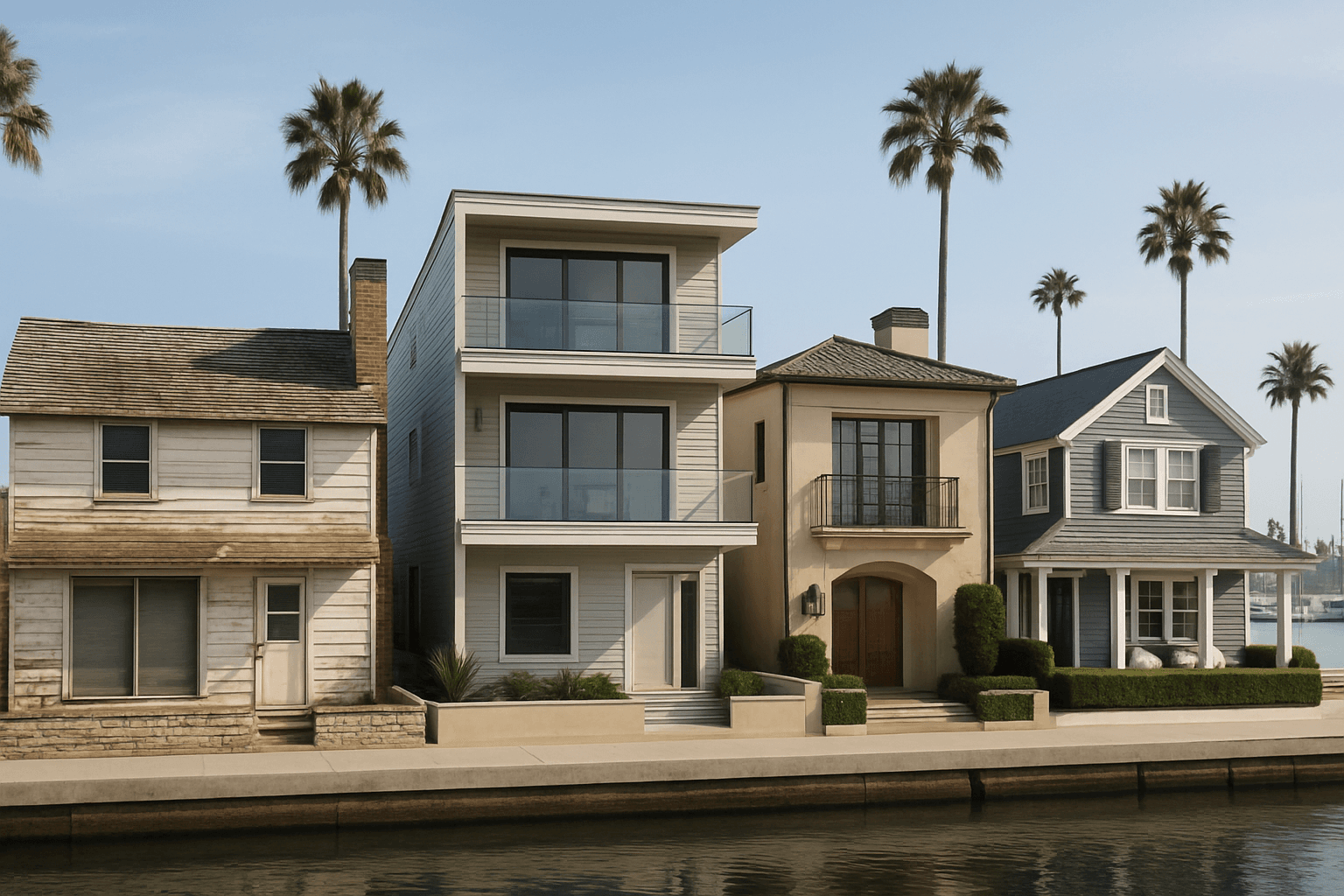
How do I find a teardown or development lot on the Balboa Peninsula?
Finding a teardown or development lot on the Balboa Peninsula in Newport Beach starts with lot size and zoning, then verifying setbacks, height limits, and coastal permitting with the City before you buy.
How do you find a teardown or development lot on the Balboa Peninsula?
You find a teardown or development lot on the Balboa Peninsula the same way seasoned investors do: start with the dirt, not the house. Screen for lot size, orientation, and zoning first, then confirm setbacks, height limits, and floor area allowances with the City of Newport Beach before you write anything. Layer in the coastal permitting timeline, because the entire Peninsula sits inside the coastal zone. Only after the land pencils does the address or the view enter the conversation.
On a narrow barrier peninsula like this one, most of the value lives in the land and what the City will let you build on it. An older cottage on a good lot can be worth more torn down than remodeled, and a beautiful remodel on a compromised lot can be a slow resale. Ratowsky Group approaches these searches as a math problem before a design project, which is exactly how a buyer avoids overpaying for a lot that will not support the home they have in mind.
This guide walks through what actually makes a Peninsula lot a development opportunity, what to verify and with whom, and how the permitting and economics tend to play out in Newport Beach. Nothing here is a buildable-envelope promise. Every specific number, dimension, and allowance has to be confirmed with a licensed architect and the City, and this article is careful never to assert otherwise.
What actually makes a Balboa Peninsula lot a real development opportunity?
A real development opportunity is a lot where the land value, the buildable potential, and the finished-product ceiling all line up. On the Balboa Peninsula, that usually means an aging structure sitting on land that could support a materially better home under current code. The improvement is close to a rounding error, and the underlying dirt is the asset.
The Peninsula stretches from the West Newport end near the Newport Pier and McFadden Square down through Balboa Village and the Fun Zone to Balboa Peninsula Point at the far tip near the Wedge. Land values, lot patterns, and buildable potential shift as you move along it, so a lot that pencils near Balboa Peninsula Point may not pencil the same way in West Newport. That block-to-block variation is why generic per-foot averages are close to useless here.
The strongest opportunities tend to share a few traits: a lot wide and deep enough to support a modern floor plan, a location that commands a premium at resale, and an existing home old enough that nobody is paying for it in the price. You can explore how these micro-markets differ on the communities pages, and the higher end of what a finished Peninsula rebuild can become is reflected across the luxury portfolio.
How do lot size and dimensions shape what you can build on the Peninsula?
Lot size and shape drive almost everything on a barrier peninsula, because the land is finite and the historic subdivisions were platted small. Many Balboa Peninsula lots are narrow relative to what buyers expect from a modern home, and a lot of the original beach cottages were built to a different era's standards. The width of your lot often decides your floor plan more than your budget does.
A wider lot gives an architect room for a functional layout, garage access, and light on both sides. A narrow or shallow lot forces vertical design and tighter rooms, which is workable but changes the cost and the finished feel. Corner lots, alley-loaded lots, and bayfront or oceanfront parcels each carry their own design and access implications, and each one has to be measured, not assumed.
Do not rely on the tax roll or a listing sheet for dimensions. Order or review a current survey, confirm the legal description, and have your architect overlay the buildable area against the City's requirements. Buyers who think like investors, which is the mindset Ratowsky Group encourages on the buyers side, treat the survey as a gating document, not a formality.
What setback, height, and floor area limits should you verify with the City of Newport Beach?
The core buildability questions on the Balboa Peninsula come down to setbacks, height, and how much floor area you are allowed relative to lot size. These are governed by Newport Beach's zoning code and its certified Local Coastal Program, and they vary by zone and sometimes by block. This article does not state specific figures because they must be confirmed for your exact parcel with the City and a licensed architect.
Setbacks define how close to each property line you can build, including front, side, rear, and any alley or bulkhead conditions on waterfront lots. Height limits control your vertical envelope and are one of the most commonly misunderstood constraints on the Peninsula, since flat and sloped roof forms can be treated differently. Floor area limits cap how much home the lot will legally support, which is often the single number that makes or breaks a development pro forma.
Before you rely on any of it, pull the zoning for the parcel, request the applicable development standards, and ask the City's planning counter to confirm coastal zone requirements. A quick conversation with Craig and Justin Ratowsky through the contact page can help you frame the right questions, but the binding answers come from the City and your design professional, not from a real estate agent.
Why does coastal permitting matter, and how long can it take?
Coastal permitting matters because the entire Balboa Peninsula lies within California's coastal zone, so most new construction and many substantial remodels require a Coastal Development Permit in addition to standard building permits. Newport Beach has a certified Local Coastal Program, which means the City itself issues most of these permits under state-approved standards. That local authority tends to make the process more predictable than it would be if every project went straight to the state, but it does not remove the coastal layer.
Certain projects, appeals, or parcels in appealable areas can still involve the California Coastal Commission, and public access, sea level, and shoreline conditions are all part of the review on a waterfront parcel. Because of that, coastal review adds time and uncertainty that a buyer needs to price into the schedule. Treat the permitting calendar as a real cost, not an afterthought.
Timelines vary widely with project complexity, staff workload, and whether a project triggers additional review, so no honest agent can quote you a fixed number of months. The practical takeaway is to build a generous permitting window into your holding-cost math and to lean on a licensed architect and land-use professional who work in Newport Beach regularly. Ratowsky Group can point you toward the right categories of professionals, without endorsing any single firm.
What are the steps to evaluate a Balboa Peninsula development lot?
A disciplined evaluation sequence keeps you from falling in love with an address before the land has earned it. Here is the order Ratowsky Group tends to work through with development-minded buyers on the Peninsula. Each step gates the next, so a failure early on saves you the cost of the later ones.
- Confirm the lot. Pull a current survey, verify legal dimensions and easements, and check the alley, bulkhead, or shoreline conditions on waterfront parcels.
- Pull the zoning. Get the parcel's zone, applicable setbacks, height limits, and floor area standards from the City of Newport Beach, in writing where possible.
- Map the coastal layer. Determine whether a Coastal Development Permit applies, whether the parcel is in an appealable area, and what that adds to the timeline.
- Bring in an architect early. Have a licensed architect sketch a realistic buildable envelope against the code before you commit, not after.
- Check flood and elevation. Review the FEMA flood zone and any base flood elevation requirements, which affect design, cost, and insurance on a barrier peninsula.
- Pencil the pro forma. Add land cost, demolition, permitting time as a carrying cost, hard and soft construction costs, and a contingency, then compare against a realistic finished-value ceiling.
- Verify utilities and access. Confirm sewer, water, and parking requirements, since parking and access are perennially tight on the Peninsula.
- Structure the offer. Build in the inspection and feasibility contingencies that let you walk if the buildable envelope or the coastal timeline does not support your plan.
How do micro-locations like the Wedge affect value and buildability?
Micro-location is where the Balboa Peninsula rewards local knowledge. The tip of the Peninsula near the Wedge and Balboa Peninsula Point carries a different value profile than West Newport near the pier, and a bayfront lot behaves differently from an oceanfront or interior lot even on the same street. Buyers regularly ask specifically for development lots near high-value pockets like the Wedge, and those requests are real and recurring.
The catch is that a premium micro-location does not automatically translate into a better buildable envelope. A trophy address can sit on a constrained lot, and a quieter interior street can offer a more workable footprint. The value ceiling at resale and the cost to build have to be evaluated together, block by block, which is exactly the kind of hyperlocal read Craig and Justin have built through decades in coastal Orange County.
When a buyer is targeting a specific pocket, Ratowsky Group looks at recent comparable sales, the depth of buyer demand in that micro-market, and what finished homes on similar lots have actually achieved. You can start orienting yourself on the communities pages, then have a direct conversation about how a given block prices out. General market context for Newport Beach is worth watching through neutral data sources rather than any single opinion.
Should you remodel or tear down an older Peninsula home?
The remodel-versus-teardown decision comes down to the condition of the existing structure, the gap between what a remodel and a rebuild can achieve, and the code constraints tied to keeping walls versus starting fresh. On the Balboa Peninsula, many original cottages were built decades ago to standards that a modern buyer no longer wants, which pushes more of these decisions toward a full rebuild. Still, the answer is parcel specific.
Here is a simplified way to weigh the two paths. Neither is inherently better, and the right call changes with the lot, the budget, and the finished-value ceiling.
- Remodel: preserves an existing nonconforming footprint in some cases, can be faster and less capital intensive, but is limited by the old structure's bones, layout, and systems, and heavy remodels can still trigger coastal and code upgrades.
- Teardown and rebuild: lets you design to current code and modern expectations and often supports the highest finished value, but carries higher upfront cost, demolition, a full permitting cycle, and a longer holding period.
- The deciding factors: how sound the existing structure is, whether keeping walls preserves a legal advantage, the spread between remodeled and rebuilt resale value, and how the coastal permitting timeline affects your carrying costs.
What due diligence protects you before you buy a teardown lot?
Due diligence on a teardown is about confirming the land will support your plan before your money is committed. That means inspections that focus on the lot and its constraints rather than the cosmetic condition of a home you intend to demolish. The house is often the least important thing you are buying.
Prioritize the survey, the zoning and development standards, the coastal permitting picture, the FEMA flood zone and any elevation requirements, soils and any environmental considerations, and confirmation of utilities and parking. On a barrier peninsula, water table, shoreline, and bulkhead conditions on waterfront lots deserve real attention. Any specific finding should be verified by the appropriate licensed professional, not accepted on a listing sheet.
Structure your offer so the feasibility work happens inside contingency periods that let you exit if the numbers or the buildable envelope do not hold up. This is where representation earns its keep. Ratowsky Group helps buyers organize the sequence, ask the City the right questions, and keep the timeline honest, while leaving the binding determinations to architects, engineers, and the City itself.
Who verifies the buildable envelope, and why can't an agent promise it?
The buildable envelope is verified by a licensed architect working from a current survey and the City of Newport Beach's development standards, and confirmed through the City's planning and building review. A real estate agent, however experienced, is not the party who determines what you can legally build. Anyone who hands you a firm envelope before that work is done is guessing, and on the Balboa Peninsula guessing is expensive.
This is not a technicality. Setbacks, height, floor area, and coastal requirements interact in ways that only show up when a professional overlays them on your specific parcel. Two lots on the same block can yield different buildable homes, so the answer has to be earned parcel by parcel.
What Ratowsky Group does bring is the ability to identify lots worth the analysis, read the micro-market, connect you with the right categories of professionals, and negotiate an offer that protects you while that verification happens. That combination of old-school local relationships and disciplined process is how a development search stays grounded instead of speculative.
How does Ratowsky Group help buyers find development opportunities in coastal Orange County?
Ratowsky Group works development-minded buyers across coastal Orange County, from Newport Beach and the Balboa Peninsula to Huntington Beach and the harbor communities. The team pairs Craig's market memory going back to 1977 with Justin's systems-driven approach, which is useful when a search depends on catching the right lot before it is obvious to everyone else. Craig and Justin are founding agents of Compass Huntington Beach and bring 58 years of combined experience to the coast.
For development buyers specifically, that means screening lots for real buildable potential, reading block-by-block value, and running the pro forma before the emotion sets in. The team's finished-product experience on the high end, reflected in the luxury portfolio, informs what a well-executed Peninsula rebuild can actually achieve at resale.
If you are hunting a teardown or development lot on the Balboa Peninsula, the next step is a direct conversation about your target pockets, your budget, and your timeline. Reach Craig and Justin Ratowsky through the contact page and they will help you build a grounded game plan, then bring in the architects and City resources that make the buildable envelope real.
One verified number worth knowing: Ratowsky Group's top recorded oceanfront sale, on the Balboa Peninsula in Newport Beach: $6,655,000 (source: Compass production records).
As Justin Ratowsky, Realtor, DRE #02026158, Ratowsky Group at Compass puts it: "We treat a development lot as a math problem before it's a design project. Know your land cost, your permitting timeline, and your build cost before you fall for the address."
Sources
Frequently asked questions
- How much does a teardown lot cost on the Balboa Peninsula?
- Prices vary widely by micro-location, lot size, and orientation, so there is no single figure. A bayfront or oceanfront parcel near Balboa Peninsula Point prices very differently from an interior lot in West Newport. Review current comparable sales for the specific block and lot type rather than relying on a Peninsula-wide average, and confirm the numbers before you write an offer.
- Do you need a coastal development permit to rebuild on the Balboa Peninsula?
- Most new construction and many substantial remodels on the Balboa Peninsula require a Coastal Development Permit because the entire Peninsula sits in California's coastal zone. Newport Beach has a certified Local Coastal Program, so the City itself issues most of these permits, though some projects can involve the California Coastal Commission. Confirm what applies to your parcel with the City and a licensed land-use professional.
- How long does it take to build a new home on the Balboa Peninsula?
- Timelines depend on design complexity, permitting including coastal review, and construction, so no honest estimate is a fixed number. Coastal permitting can add time that buyers should treat as a real carrying cost. Build a generous window into your budget and work with an architect and builder who regularly permit in Newport Beach.
- Can you tear down and rebuild on a nonconforming Peninsula lot?
- It depends on the parcel and current code, since some older lots carry nonconforming conditions that affect setbacks, height, or floor area. In some cases keeping existing walls preserves an advantage, while a full teardown resets you to current standards. A licensed architect and the City of Newport Beach have to confirm what a specific lot allows before you commit.
- Is it better to remodel or tear down an older Balboa Peninsula home?
- That depends on the condition of the existing structure, the value spread between a remodel and a rebuild, and the code constraints tied to each path. Many original Peninsula cottages push the decision toward a rebuild, but the right answer is parcel specific. Weigh finished-value ceiling, cost, and the permitting timeline together before deciding.
- What is the Wedge and does being near it add value?
- The Wedge is a well-known bodysurfing and shore-break spot at the far tip of the Balboa Peninsula near Balboa Peninsula Point. Proximity to high-value pockets like this can support premium resale value, but a great location does not guarantee a better buildable lot. Evaluate the value ceiling and the buildable envelope together, block by block.
Topics
- best Huntington Beach realtor
- best Huntington Beach real estate agent
- Huntington Beach realtor
- Huntington Beach real estate agent
- Huntington Beach real estate broker
- Ratowsky Group
- Justin Ratowsky realtor
- Justin Ratowsky Huntington Beach realtor
- Compass Huntington Beach